.png)

Sustainability discussions often center on solar panels, electric cars, or recycling — yet an overlooked contributor sits quietly in almost every home: the Wi-Fi network.
The way broadband providers troubleshoot customer issues carries a larger environmental footprint than most realize — one that remains largely invisible to consumers. Every support call, truck roll, and premature hardware swap adds up — not only in cost, but in carbon and e-waste.
True digital sustainability depends not just on how networks are powered, but on how intelligently they are maintained and supported.
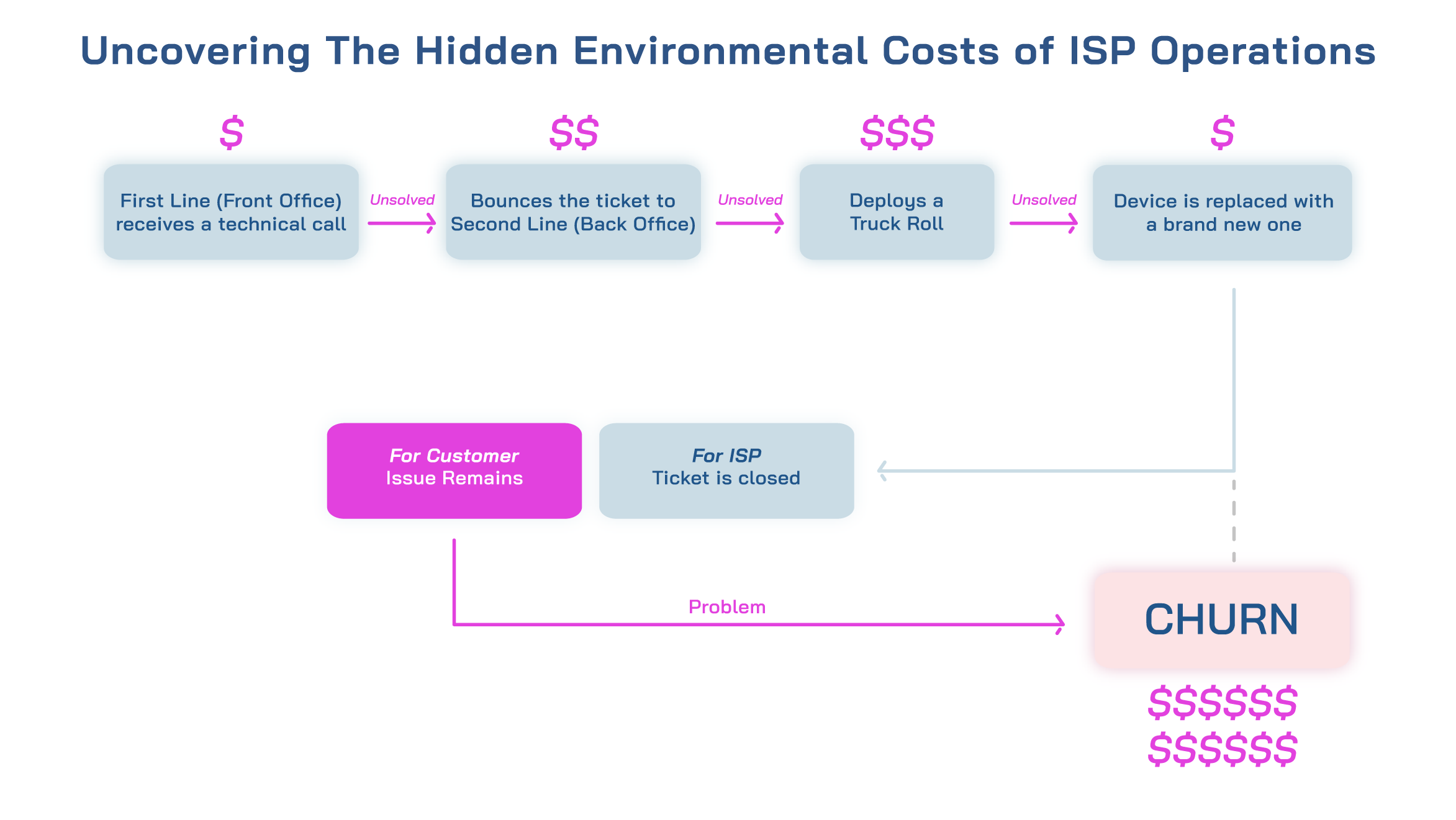
Traditional customer support has remained largely unchanged for years. A customer calls, waits on hold, and if the issue is not resolved quickly, a technician drives out or the customer’s hardware is replaced.
This process carries real costs:
Multiplied across millions of households, these small inefficiencies become a massive environmental burden.
This is where smarter, data-driven support changes the game. Turning Wi-Fi data into insight and action allows ISPs to tackle problems at the source — before they lead to wasted calls, visits, or hardware.
1. Analytics: From Guesswork to Clarity
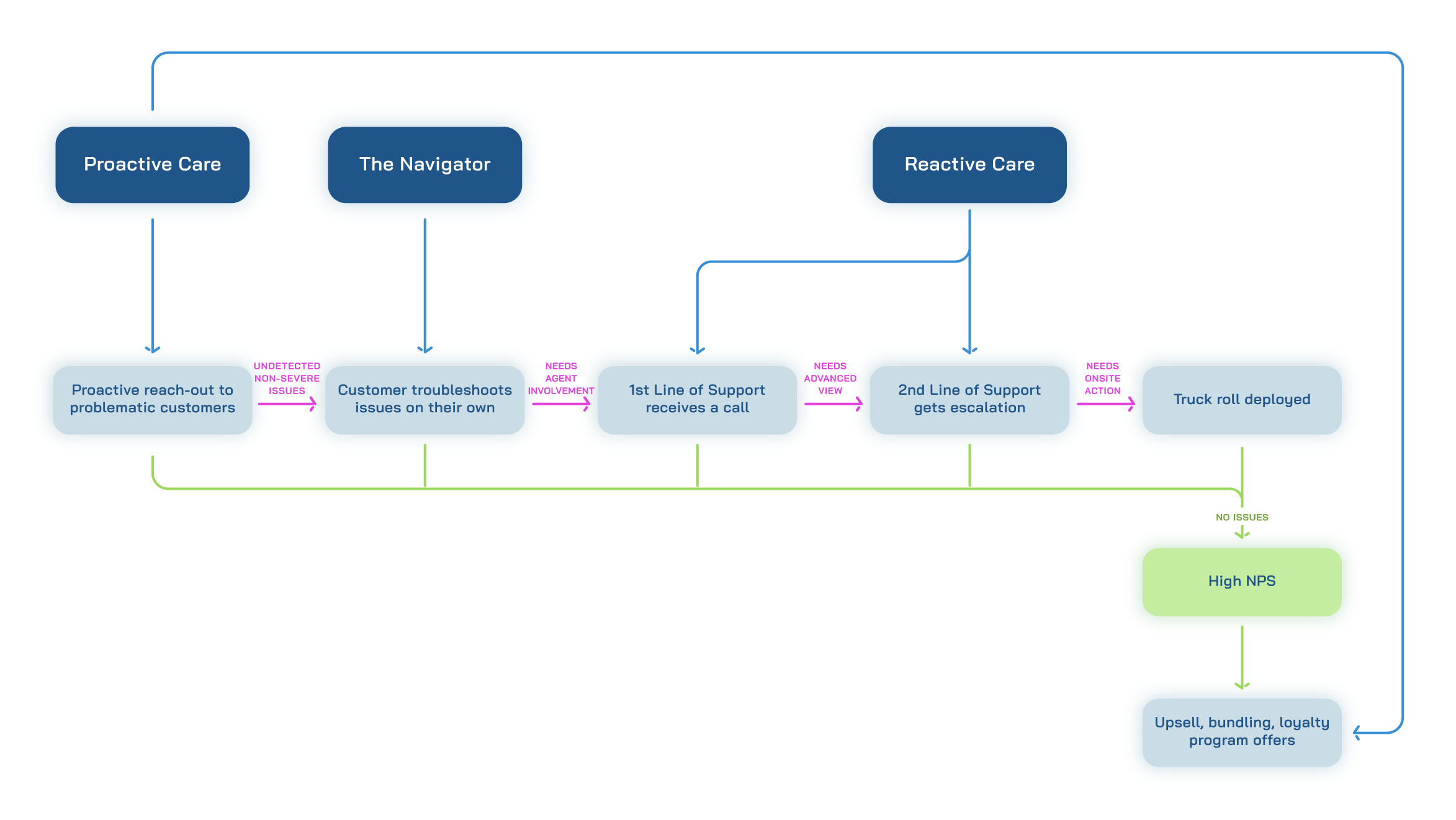
Support agents can finally see what is happening in a home network. With Reactive Analytics, they solve problems faster, and with Proactive Analytics, they can even fix issues before a customer calls. That means fewer repeat tickets, shorter wait times, and happier customers.
In reactive calls where mesh was offered, Lifemote’s data shows that roughly 25% of households did not actually need it — thanks to deeper insight into real coverage problems— while mesh sales occur in roughly 10–20% of incoming reactive calls. Distinguishing when mesh truly helps and when it does not enables ISPs to improve customer satisfaction while avoiding unnecessary hardware and emissions.
2. Navigator: Guiding Customers Smarter
Instead of leaving customers on hold, Lifemote enables digital-first workflows:
These solutions are more efficient, less resource-intensive, and far less frustrating for the customer.
Up to 3,100,000 kg CO₂ and 9,000 kg of e-waste can be saved each year through smarter support and digitalized operations.
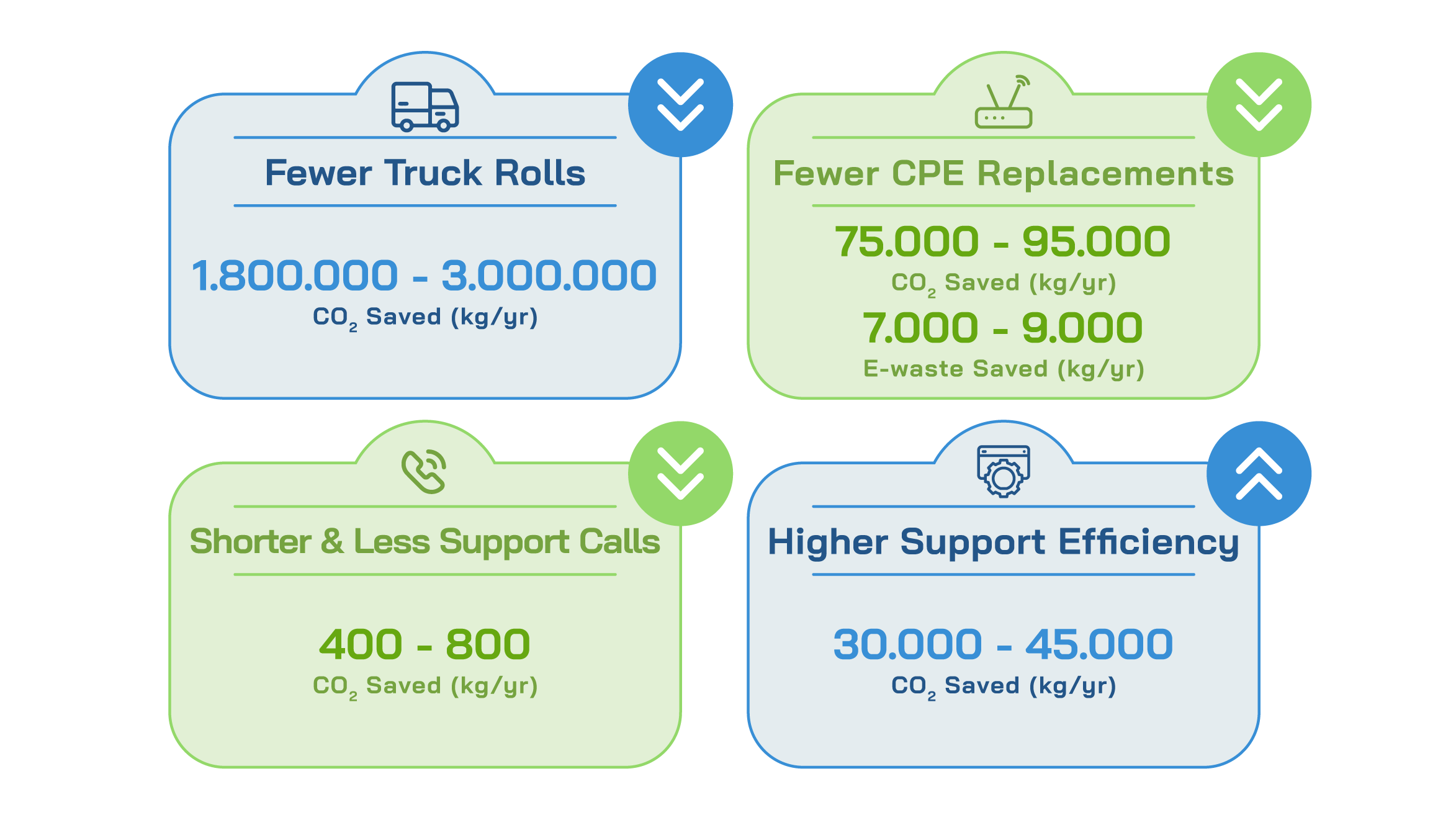
It is possible to save up to 3,100,00 kg CO₂ and 9,000 e-waste per year. These aren not just environmental wins — they’re operational and financial ones too.
Wi-Fi technology is evolving rapidly — from Wi-Fi 6 to 6E and now 7 — promising faster speeds and better performance. Yet without smarter tools, higher capacity can easily lead to higher complexity and more complaints.
Lifemote ensures the opposite: as networks get faster, they also get greener. Digitalized support, empowered customers, and fixes at the source ensure connectivity remains efficient in every sense of the word.
Sustainability is not always about big, headline-grabbing projects — sometimes it’s about removing the hidden waste in day-to-day operations.
Lifemote helps ISPs cut down on unnecessary calls, truck rolls, and hardware replacements. The result? Lower costs, happier customers, and a smaller carbon footprint.
In the end, every fix counts — for the business, for the customer, and for the planet.
.svg)

.svg)

.svg)
.svg)

.svg)
.svg)
.svg)
.svg)


.svg)
.svg)


